

Nabelóse

© Nabelóse
© Nabelóse
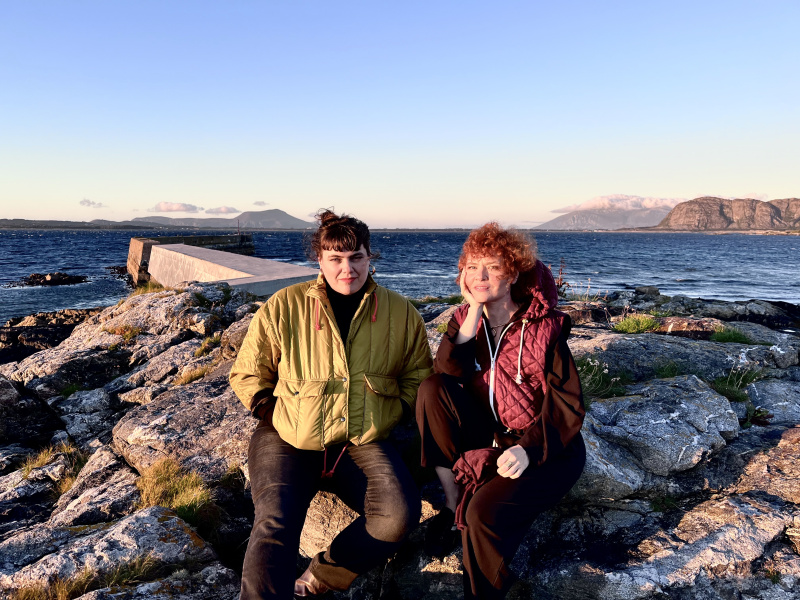
Since forming their duo Nabelóse back in 2016 Ingrid Schmoliner and Elena Kakaliagou have consistently defied expectations, forging mercurial blend of meditative lyricism, spellbinding rhythm, and poetic wanderlust. The project illustrates the foolishness of making assumptions about what creative musicians are all about, with both artists nonchalantly going against type. They’re both known primarily as instrumentalists—Schmoliner is an Austrian pianist who blends fierce minimalism and a wildly extended palette of prepared piano and elaborate miking arrays to forge music of driving intensity that harnesses the full spectrum of her instrument and its attendant overtones to produce works of ecstatic beauty and mind-melting motion. She’s a committed collaborator, too, whether improvising with drummer Hamid Drake or working in the collective GRIFF. The Berlin-based Greek horn player Kakaliagou is a dynamic improviser noted for her deep explorations of just intonation as a member of the trio Zinc & Copper with Robin Hayward and Hilary Jeffery. She’s also a long-time member of Zeitkratzer and the Stefan Schultze Large Ensemble. Both musicians incorporate their primary instruments in Nabelóse, but the overall sound world feels miles away from those practices.
2026 sees the release of the project’s stunning third album HAAR, straddling the divide between fiercely hypnotic rhythms and ethereal textures. While voice has always been a part of Nabelóse’s arsenal, it’s never been so prominently featured. While the arrangements are wide open, all five pieces convey a song-like orientation.
The cycling piano line that initiates the opening piece, “Niriides,” will strike a chord with anyone familiar with Schmoliner’s keyboard work, but the presence of Kakaliagou’s ancient Greek recitations from Homer’s Iliad—a list of the fifty goddesses of the sea—quickly pushes the music in a different direction, balancing kinetic motion and measured contemplation. Unpitched horn breaths and solemn piano chords cast a calm but charged atmosphere on “Perfume,” yet once Kakaliagou begins her astonishingly tender vocal performance the listener is taken on yet another detour—an extended ballad of almost crushing beauty and fragility. The track features subtle electronic elements from Bilgehan Ozis, who mixed the entire album.
Schmoliner and Kakaliagou both recite poetic texts in German and Greek, respectively, in “Hinter Meinen Dünen”, which unfolds over a delicate drone that rises and falls like a hill beneath the voices. But that reverie is shattered by the insistent, hammering piano part played using a traditional Greek folk music rhythm and vocalic horn gestures on the reserved yet fierce “Blue Mountains”. Kakaliagou delivers the Greek lyrics by speaking through her horn for a compelling metallic quality.
The album concludes with the stunning invocation of “Toke,” which features a powerful cameo from the Berlin-based percussionist Els Vanderwyer adding extra resonance to the sustained tones, tiny but piercing percussive gestures and heavenly singing, including Schmoliner’s stunning overtone singing in an imaginary language of her own design. As the piece unfolds Kakaliagou contributes a horn solo of uncommon power, a wordless expression of almost divine beauty.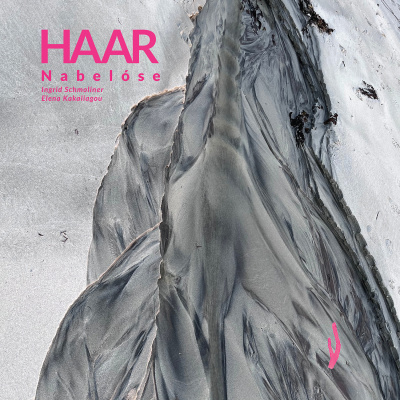
https://www.elenakakaliagou.com/
2026 sees the release of the project’s stunning third album HAAR, straddling the divide between fiercely hypnotic rhythms and ethereal textures. While voice has always been a part of Nabelóse’s arsenal, it’s never been so prominently featured. While the arrangements are wide open, all five pieces convey a song-like orientation.
The cycling piano line that initiates the opening piece, “Niriides,” will strike a chord with anyone familiar with Schmoliner’s keyboard work, but the presence of Kakaliagou’s ancient Greek recitations from Homer’s Iliad—a list of the fifty goddesses of the sea—quickly pushes the music in a different direction, balancing kinetic motion and measured contemplation. Unpitched horn breaths and solemn piano chords cast a calm but charged atmosphere on “Perfume,” yet once Kakaliagou begins her astonishingly tender vocal performance the listener is taken on yet another detour—an extended ballad of almost crushing beauty and fragility. The track features subtle electronic elements from Bilgehan Ozis, who mixed the entire album.
Schmoliner and Kakaliagou both recite poetic texts in German and Greek, respectively, in “Hinter Meinen Dünen”, which unfolds over a delicate drone that rises and falls like a hill beneath the voices. But that reverie is shattered by the insistent, hammering piano part played using a traditional Greek folk music rhythm and vocalic horn gestures on the reserved yet fierce “Blue Mountains”. Kakaliagou delivers the Greek lyrics by speaking through her horn for a compelling metallic quality.
The album concludes with the stunning invocation of “Toke,” which features a powerful cameo from the Berlin-based percussionist Els Vanderwyer adding extra resonance to the sustained tones, tiny but piercing percussive gestures and heavenly singing, including Schmoliner’s stunning overtone singing in an imaginary language of her own design. As the piece unfolds Kakaliagou contributes a horn solo of uncommon power, a wordless expression of almost divine beauty.
RELEASES
LINKS
https://ingridschmoliner.klingt.org/https://www.elenakakaliagou.com/


